
Tool Crib or Point-of-Use Vending: How to Decide What the Shop Floor Actually Needs
by a.huynh |
Most factories do not have to choose between a tool crib and point-of-use vending as if one must replace the other. The useful question is more precise: which items still need a staffed store, which should be issued at the cell, and which can sit in a locked cupboard or cage that the same system can see.
A crib remains a good idea for some work. It is a poor default for high-use consumables that send people walking, waiting or building unofficial stashes. This article sets out how to split the inventory, how a hybrid model works, and the questions to ask before you move a single bay of stock.
What a tool crib still does well
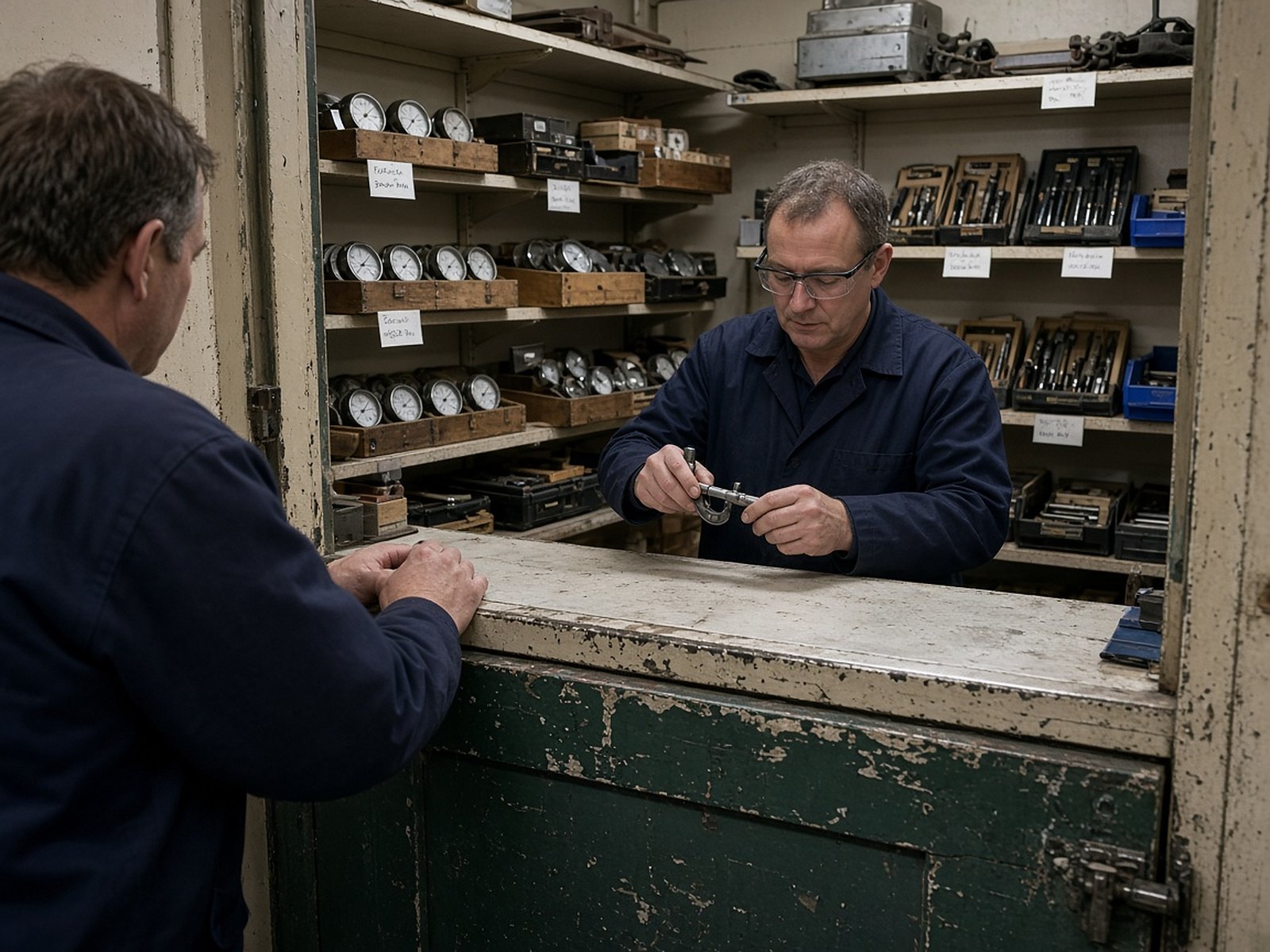
A traditional crib, whether it is a hatch, a locked tool store or a manned issue counter, earns its keep when the transaction needs judgement.
That includes:
- High-value or calibrated items that should be inspected, booked and sometimes used only after a check.
- Awkward, bulky or hazardous items that are a poor fit for a cabinet.
- Low-frequency specials, where a person in the store knows the substitute or the drawing.
- Kitting for a job that changes every time, where a pre-built kit is safer than a guess at the cabinet.
- Incoming inspection, quarantine and the formal release of new tooling.
If your crib is really a library of returnable instruments, a cutting-tool crib with reconditioning flow, or a controlled store for calibrated gauges, do not dismantle it for the sake of automation. The control is the point. The question is whether everyday inserts, gloves, end mills and fasteners should still live behind the same hatch.
Where a crib starts to cost more than it saves
The costs that usually justify a change are not dramatic. They are repeated small losses that a busy plant stops seeing.
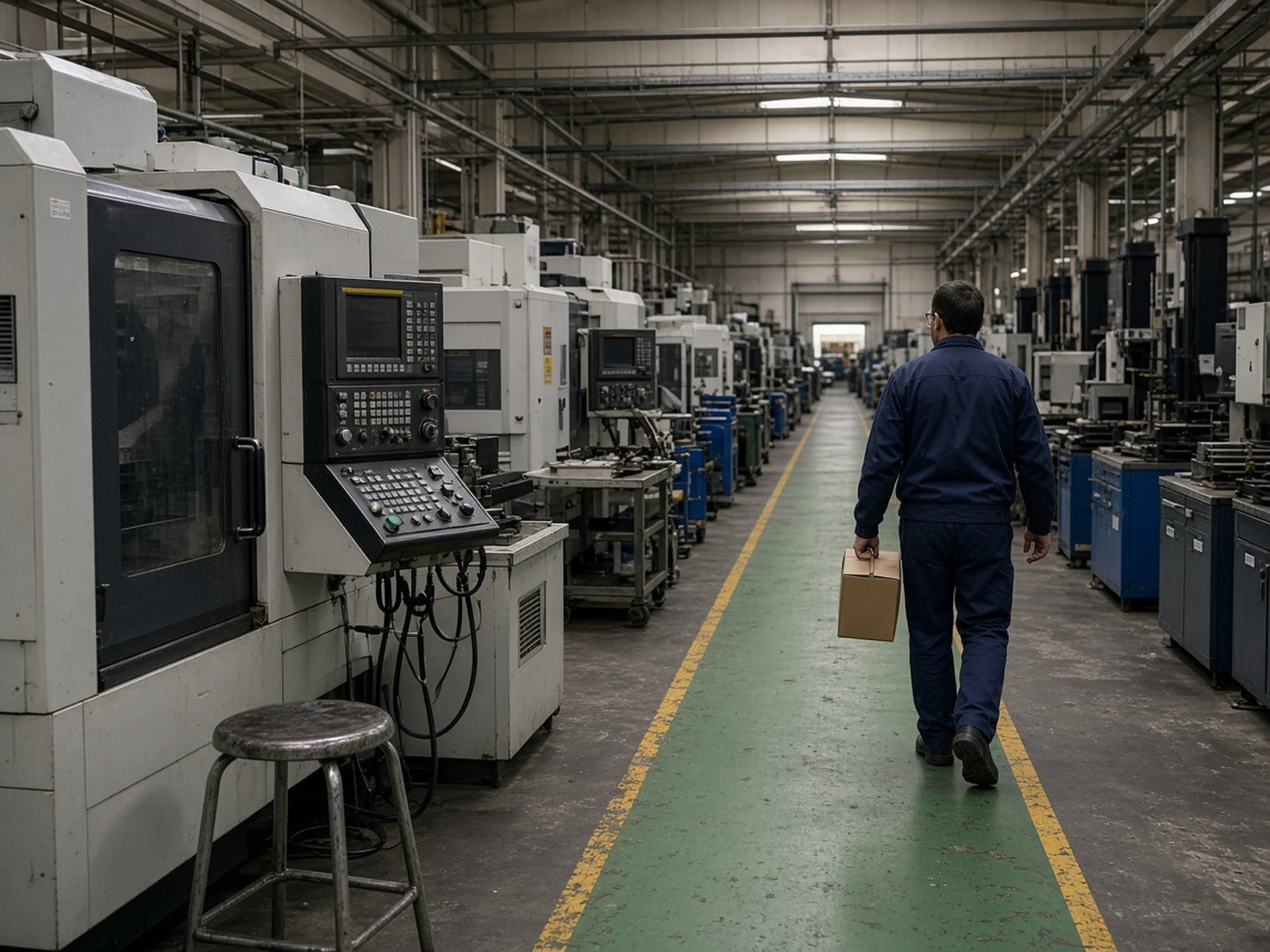
Walking is the most obvious. If a setter or operator leaves the cell for a standard insert, a pair of gloves or a collet, the journey is short on a plan and long in a real factory: the wait at the hatch, the search, the walk back, and the job sitting idle. The existing article on walk-time in manufacturing is the right place to think about those journeys with a stopwatch, not a slogan.
Opening hours are the next. A crib that closes at the end of days, or that is thinly covered on nights and weekends, invites unofficial holdings. People are not being difficult. They are protecting the next shift. The article on why skilled people hoard tools describes that behaviour plainly. A cabinet that can issue against a named user at all hours removes the excuse, provided the stock list is right.
Accountability is the third. A hatch can keep a paper book or a spreadsheet. It rarely tells you, without extra work, which job used the last box of inserts, or whether a gauge came back. Point-of-use systems keep an audit trail of who took what and when. That does not make the crib obsolete. It does mean the crib should be reserved for transactions that still need a person.
There is also the hidden inventory. Cribs often hold safety stock for every cell, “just in case”. Cells then hold their own unofficial safety stock as well. You pay for both. Point-of-use issue does not magically shrink working capital, but it does make the official holding visible and the unofficial holding harder to defend.
A better frame: split the inventory, do not pick a camp
Draw a simple map of the items that keep a cell or a hall running, then sort them.
Issue at the point of use when the item is used often, the unit of issue is clear, a substitute is rarely needed at the moment of issue, and a delay of even a few minutes is expensive. Typical examples are standard inserts, drills, abrasives, packaged PPE, batteries and common fasteners.
Keep in the crib or a specialist store when issue needs a check, a conversation, or a process that sits beside the store: calibration, reconditioning, first-article approval, or the release of a restricted tool.
Control nearby, without a full vend when the item is too bulky, too cheap to vend piece by piece, or too awkward for a drawer, but you still want restricted access and a record. Electronic locks on an existing cupboard, cage or storeroom are built for that job. Virtual inventory can put those locations on the same record as the cabinets, including check-in and check-out and allocation codes, rather than leaving them on a side spreadsheet.
Leave alone for now when the demand is unclear, the item is a one-off, or the process is about to change. Moving those lines first creates noise and a bad argument about the whole idea.
This split is what point-of-use industrial storage is for. The cabinet is not a smaller crib. It is a way of putting a defined list where the work happens, with a record attached.
What a hybrid layout looks like in practice
A healthy layout often has three layers, not one.
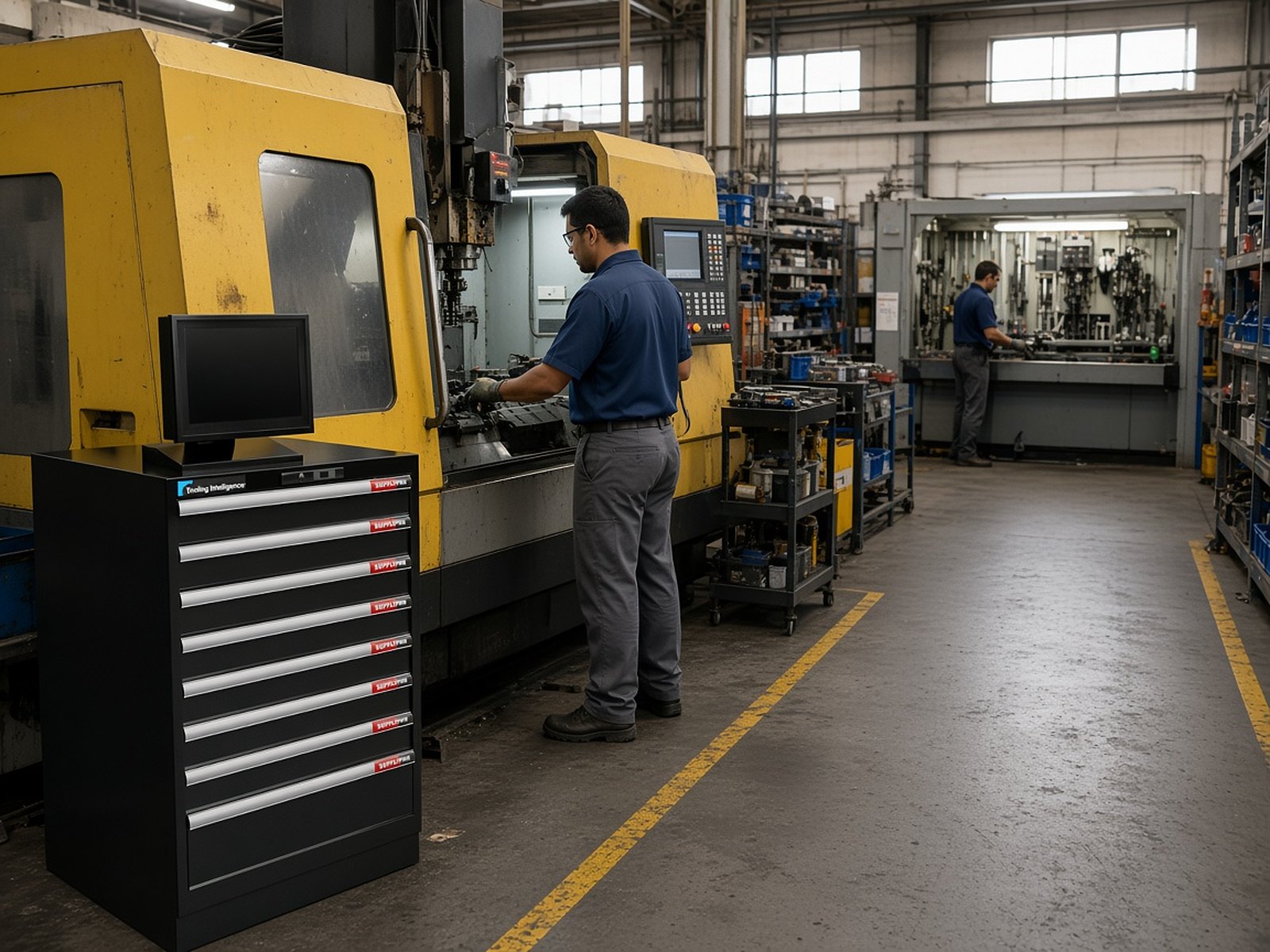
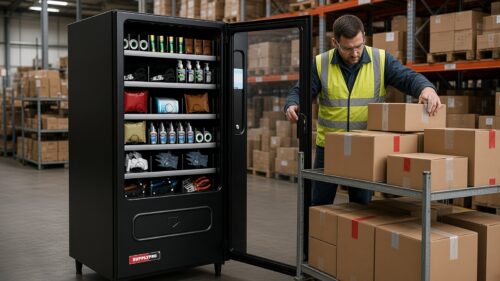
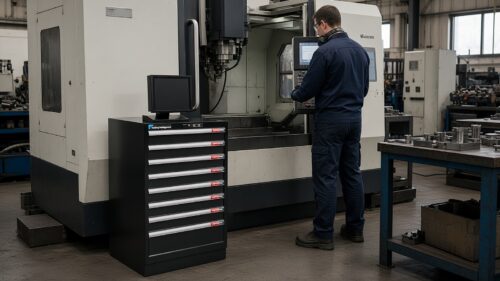
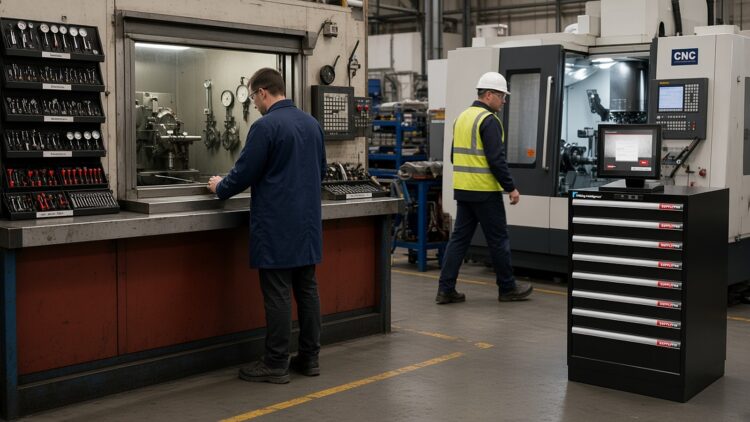
The cell or line has a compact cabinet or locker for the defined list, close enough that a person does not have to leave the work. Drawers, lockers, bays and weight-based bins can be mixed so that the method matches the item, which is why you should look at the industrial vending range as a set of methods rather than a single machine.
The crib or main store keeps the overflow, the specials, the calibration loop and the incoming inspection. It also becomes the replenishment point for the cabinets. That is a different job from issuing every glove through a hatch. Stores staff usually prefer it, once the first messy week is over, because they can replenish to a min and max instead of handling a queue of individuals.
A third layer covers the items that should be controlled but not vended: overflow cartons, bulky welding kit, refurbished parts, or a cage of infrequently used spares. Those can still be on the same system, so the plant is not running two truths about stock.
Night shifts and unmanned periods are the test of this design. If the night team still has to ring a day-shift stores person, or break into a cupboard, the split is wrong.
Questions that settle the argument
Use these in a review with operations, stores, quality and finance. They are more useful than a preference for “traditional” or “automated”.
- For the top 20 items this cell uses, how long does a typical issue take today, including walking and waiting?
- What happens on nights, weekends and shutdown cover?
- Where does unofficial stock already live, and why was it created?
- Which issues need a human judgement, and which are a standard transaction?
- Do we need a record against a person, a job, a cost centre or a machine?
- Which items are returnable, and do they actually come back?
- Who will replenish, from where, and how often, if the cabinet becomes the issue point?
- What will remain in the crib, and is that list written down?
- If we start with one cell, what would we measure after 90 days that would change our mind either way?
If you cannot answer question 8, you are not ready to move stock. If you cannot answer question 3, the cabinet will be added on top of the unofficial holdings, and nothing will improve.
How to move the first list without a fight
Start with a volunteer cell and a short list, not a store-wide recode. Tell the crib team, in writing, what they will still own. The fear that “the crib is being closed” is what creates resistance, and it is usually unnecessary.
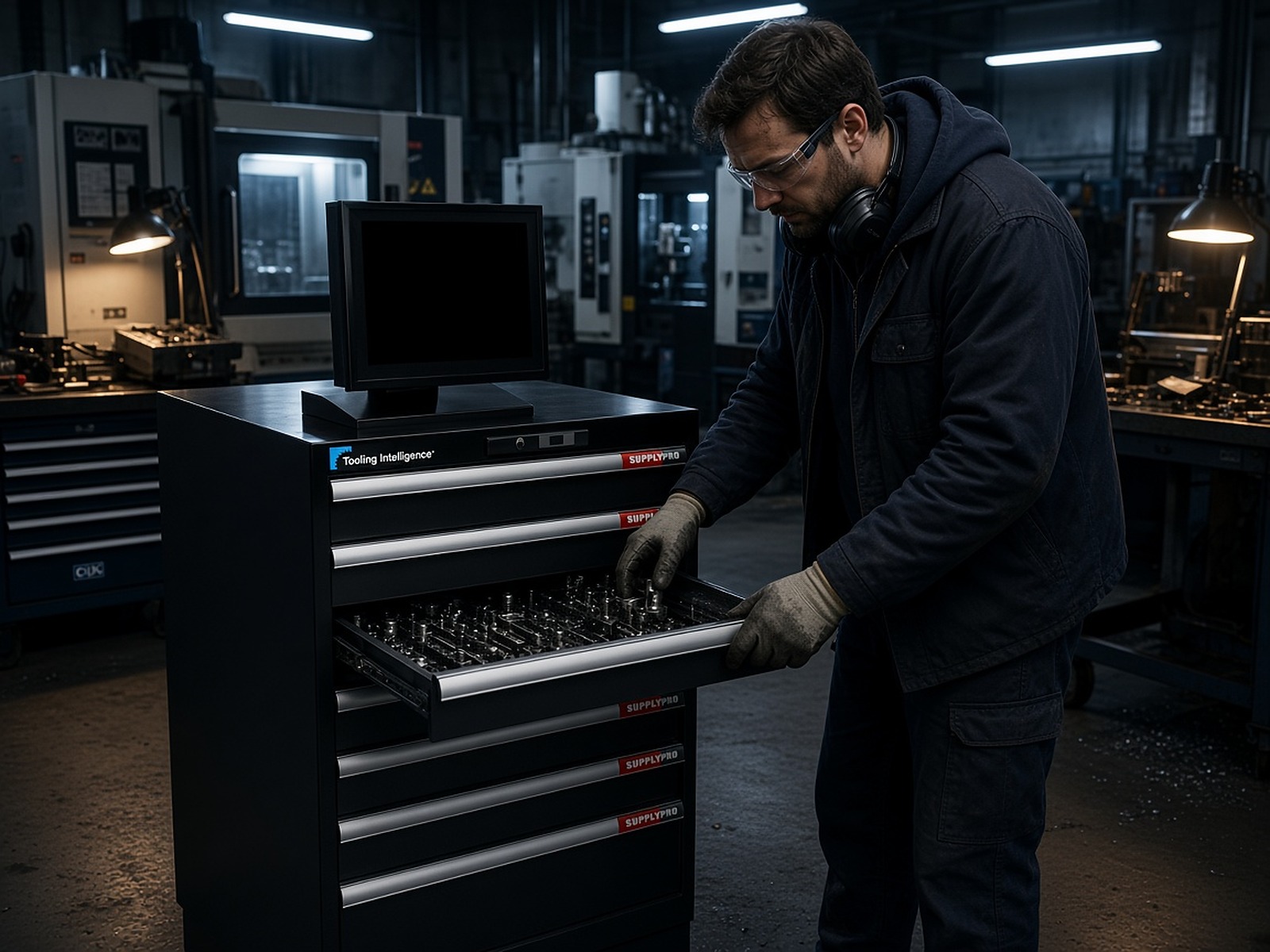
Train the people who use the items, including the cover supervisor. Leave the hatch process in place for the items that still belong there, so nobody is sent to a cabinet for a special they will not find.
Review unofficial holdings after two weeks and again after a month. If they return, ask what the cabinet failed to provide. Often it is opening hours, a missing line, or a unit of issue that does not match how the job is done (for example, issuing one glove when the task needs a pair).
Keep the crib’s remaining role visible. Calibration, kitting and specials are skilled work. Moving routine issue off the hatch should give that work more time, not less.
Frequently asked questions
Is point-of-use vending only for large plants?
No. The case depends on the cost of delay, loss and informal stock, not on headcount. A small cell with expensive tooling and a long walk can justify a cabinet sooner than a large hall with a well-placed store and a short list of specials.
Will we lose the knowledge that lives in the crib?
Not if you keep the transactions that need that knowledge in the crib. What you should not do is rely on one person remembering who took the last box of inserts. That knowledge ought to be in the record.
Can a crib and a cabinet share the same stock record?
They can, and they should, once you are ready. Items in cabinets, lockers and non-vended locations can sit under the same rules for users, alerts and allocation codes. That is the point of extending control beyond the cabinet, rather than creating a second inventory system.
What if operators “game” the cabinet and take extra?
They may, especially in the first weeks, if they do not trust replenishment. Set sensible units of issue, use named access, and review the early exceptions with the cell lead. Trust grows when the cabinet is in stock, not when a policy notice is taped to the door.
Closing
If you are arguing about whether to keep a tool crib or “go to vending”, you are probably asking the wrong question. Split the inventory, keep judgement and specials in the store, and move high-use standard issues to the point of work, with a record. The industrial vending range is the place to match drawers, lockers, bays and weight-based bins to that split. If you would like to walk through a hybrid layout, the Tooling Intelligence demonstration centre at Honiley is open by appointment, and the team can be reached on 01926 484 511.