
Open Versus Tied Industrial Vending Programmes: How to Keep Your Own Suppliers
by a.huynh |
Industrial vending is sometimes offered as if the cabinet and the replenishment contract were the same purchase. They are not. You can install point-of-use issue and still buy cutting tools, PPE and MRO from the suppliers you already trust. You can also sign up to a programme in which the machine arrives easily, and the price is paid in a narrower choice of stock.
This article explains the difference between an open programme and a tied one, the questions to ask before a “free” or heavily sponsored cabinet is accepted, and how to write supplier-neutral rules into the agreement. It is written for procurement, operations and plant managers who already have preferred suppliers and do not want to reopen that decision just to get a better issue process.
What “tied” usually means in practice
A tied programme links the hardware, and often the software, to a particular supplier’s inventory. The details vary, but the pattern is familiar:
- The cabinet is provided at a low upfront cost, or is described as part of a consumables agreement.
- Replenishment is expected to flow through that supplier, sometimes exclusively, for the lines in the machine.
- Alternative brands can be difficult to add, slow to approve, or priced in a way that makes them unattractive.
- Data on usage may be visible to the sponsoring supplier, which can be helpful for replenishment and uncomfortable if you also buy elsewhere.
- Exit is the poorly printed paragraph. If you want to keep the cabinet but change supplier, or keep the supplier and change the cabinet, you may find that one is not available without the other.
None of this is automatically unfair. Some plants want a single distributor to own replenishment, invoicing and the machine, and they are prepared to concentrate spend in return. Problems start when the plant thought it was buying an issue system, and discovers it has changed its supply base without a formal sourcing review.
What an open programme looks like
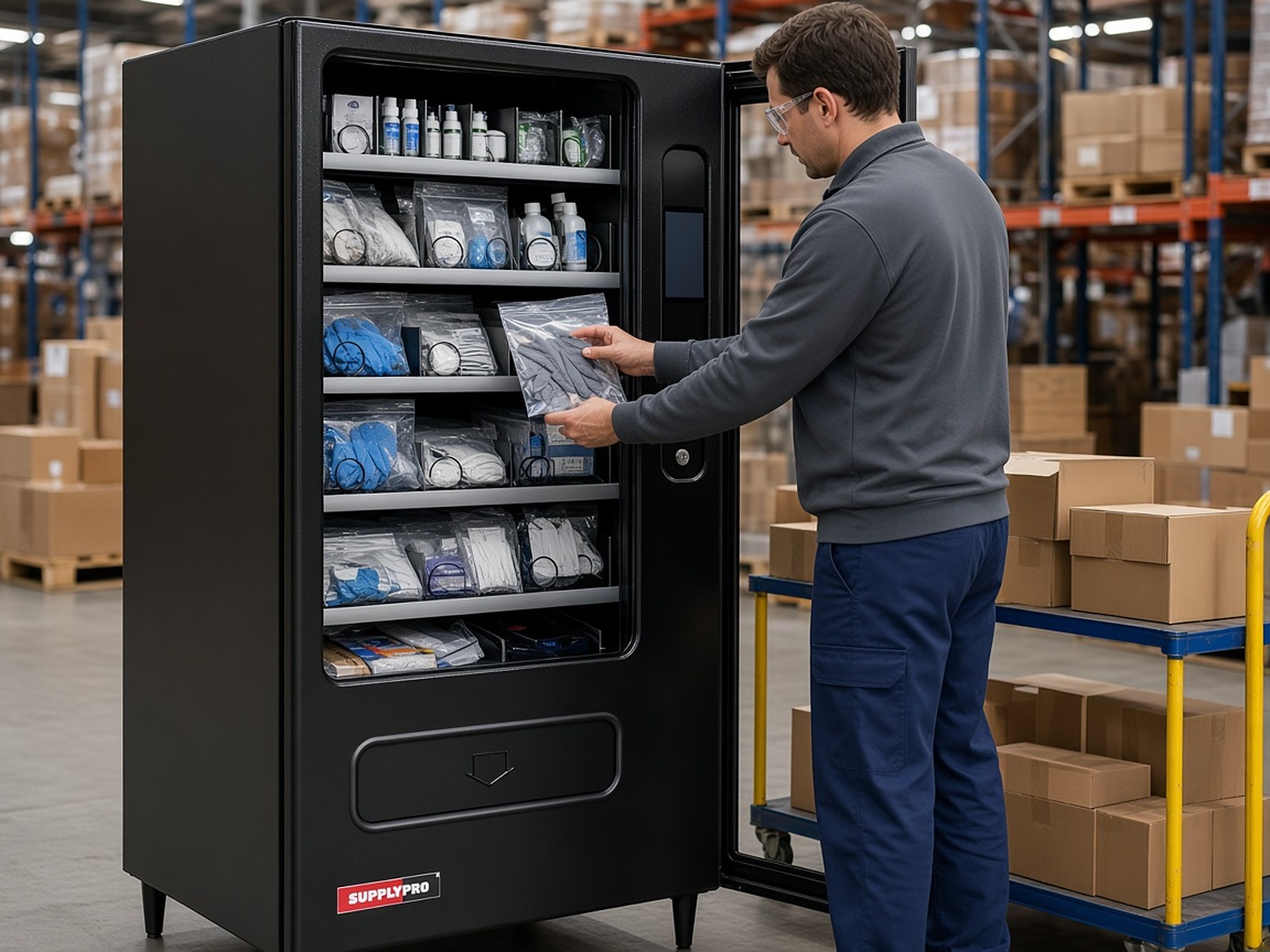
An open, or supplier-neutral, programme treats the cabinet as a control system. The customer decides which items go in, from which suppliers, and on what rules. Replenishment can still be automated, and a vendor-managed arrangement can still sit on top, but those are choices rather than the price of admission.
In that model you should expect to be able to:
- Load more than one supplier’s products in the same cabinet, including a mix of tooling brands, PPE and MRO.
- Change a line without needing the hardware provider to be the importer of that line.
- Keep existing agreements, rebates and quality approvals, and still issue those items at the point of use.
- See your own usage data first, and decide what, if anything, a supplier may receive.
- Continue, relocate or end the hardware arrangement without automatically ending your supply contracts, or vice versa.
Tooling Intelligence describes itself as an independent business, and as a partner for the SupplyPro range rather than as a tied tooling distributor. That is the positioning to test in a live discussion: who owns the stock list, who is allowed on it, and what happens if you want to add a second source.
Why lock-in is easy to miss at the business-case stage
The first meeting is usually about stock-outs, walk-time and audit trails. Those are real problems, and a cabinet can help with all of them. The commercial terms tend to arrive later, in a shorter conversation, once the plant already wants the machine.
Watch for these quiet commitments:
Brand concentration. If 80 of the 100 trial lines can only be bought from one catalogue, you have changed your sourcing policy in a stock list.
Data as a bargaining chip. Usage data is valuable. If only the sponsoring supplier can see it, they can replenish well, and they can also defend their position with figures nobody else has.
The switching cost on the cabinet itself. Software, labels, fixtures, foam layouts and user training are not costless to move. If the contract also says the hardware is withdrawn when the supply agreement ends, the switching cost is multiplied.
Quality approvals. Aerospace, medical device and automotive plants often have a formal process for introducing an alternative insert or a different glove. A tied list can slowly become the approved list, not because engineering chose it, but because it was in the machine.
Multi-site inconsistency. One site accepts a tied cabinet because the local distributor is strong there. A second site cannot use the same model with its own suppliers. You then have two processes, which is the opposite of a standard.
If you already have a vendor-managed inventory arrangement, that is not the same thing as a tied cabinet. VMI can work with an open system: the supplier replenishes to an agreed min and max, while you still decide who is allowed to supply which line. The difference is who is allowed to be “the” supplier, and whether the machine enforces that choice.
Questions to put in the request, before a demonstration
Write these into the RFQ or the meeting agenda. The answers should be in the proposal, not in a later clarification.

- Can we stock items from any supplier we approve, including our current tooling and PPE sources?
- If a line must be bought through you, which lines, and why?
- Who owns the usage data, and who may see it?
- If we end the supply agreement, can we keep the hardware and software on agreed terms? If we end the hardware agreement, can we keep our suppliers?
- How is a new item, or a second source for an existing item, added, and how long does that take?
- Are there volume commitments, rebate conditions or “minimum mix” rules that effectively exclude other brands?
- Who does the first stock list: our store, your catalogue team, or both?
- What support remains if we buy the cabinet and self-manage replenishment?
- For a trial, can we run our current suppliers for the full evaluation window?
If a supplier cannot answer question 4 clearly, treat the programme as tied, whatever it is called.
How to keep an open programme honest after go-live
Independence on paper is not enough. The stock list will drift toward whoever is easiest to replenish, unless you set a few rules and review them.
- Name an internal owner for the catalogue, usually procurement with operations, not the cabinet supplier alone.
- Record the approved source or sources against each line, including whether a second source is allowed.
- Review slow-moving and single-source lines at a fixed interval, not only when a supplier suggests a replacement.
- Keep quality approvals in your own system, so a new brand cannot appear in the cabinet before it is released.
- Decide what suppliers may receive automatically (for example, a replenishment signal for their own lines) and what they may not (the rest of the plant’s mix).
- Include exit and data handover in the contract, then file the practical steps: export formats, user lists, and who will unload the cabinet.
Service should be equally clear. An independent programme still needs installation, training and ongoing help. That work should be quoted as support, not hidden inside a consumables margin you cannot see. Tooling Intelligence’s service and support is set up as that ongoing relationship: equipment prepared before delivery, training at installation, and remote or on-site help afterwards.
Independence is not the same as being on your own
Some plants hear “open programme” and think they will have to manage every reorder themselves. They will not, unless they want to. You can have:

- Your own buyers placing orders from the signals the cabinet produces.
- One or more distributors replenishing their own lines against your min and max.
- A mixed model, with tooling from specialist suppliers and PPE or MRO from a generalist, all in the same cabinet.
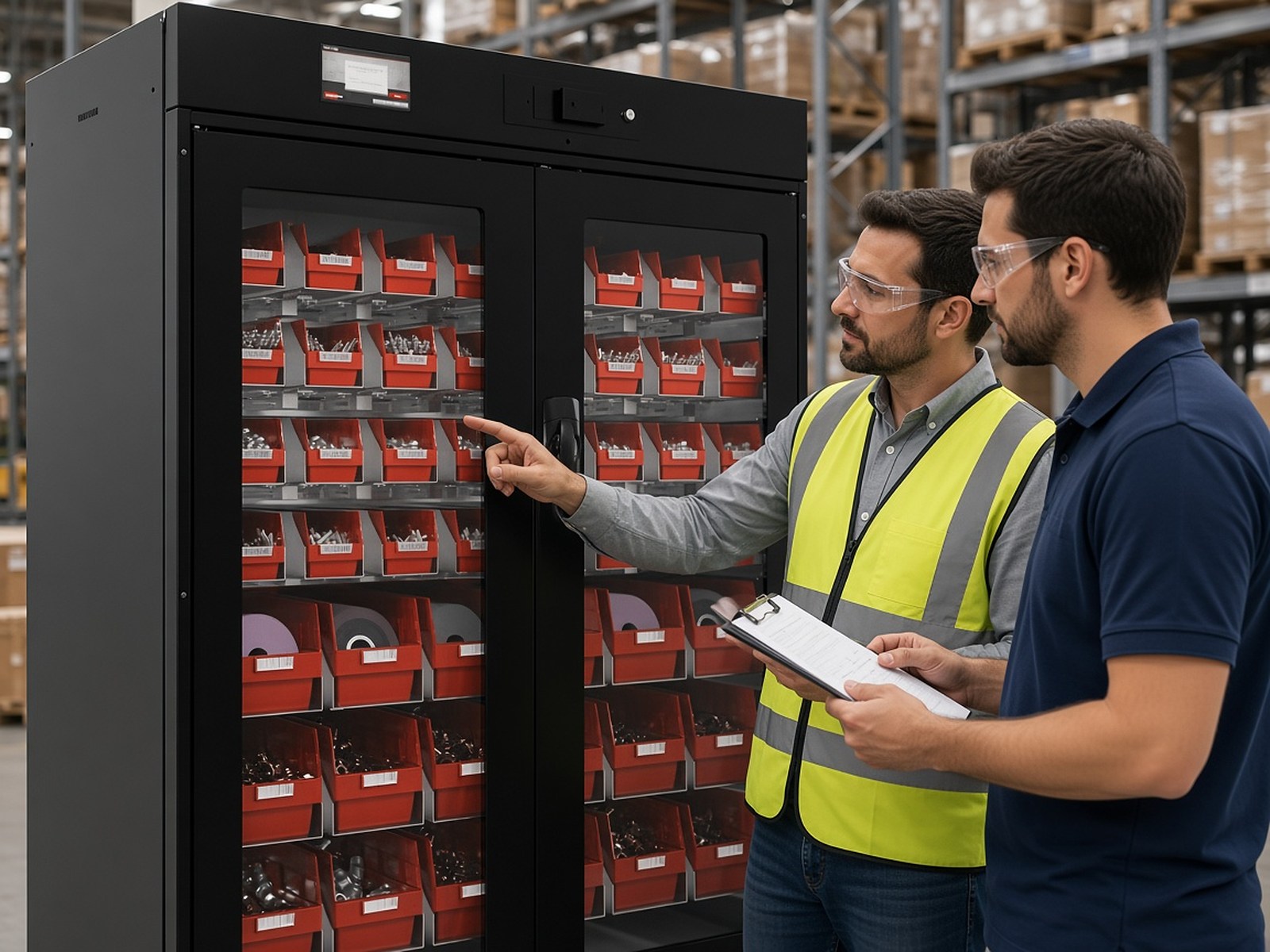
The industrial vending range is designed around that kind of mix: drawers, lockers, bays and weight-based bins for different items, and software that can restrict access, raise alerts and apply allocation codes. The commercial decision is who is allowed to fill those locations, not whether the locations can exist.
If you want to test that in person, the demonstration centre at Honiley is there to walk the hardware. Take your current stock list with you, including the supplier names. It is a more useful conversation than a generic demonstration.
Frequently asked questions
Is a tied programme always a bad idea?
No. It can work if you have already chosen that distributor as a strategic source, the pricing is visible, the quality approvals are yours, and the exit terms are acceptable. It is a poor idea if the cabinet is being used to avoid a sourcing decision, or if the plant only discovers the tie after the trial.
Will we lose volume discounts if we keep several suppliers?
You might, on individual lines, if your volume fragments. You might also avoid paying a hidden premium for a sponsored cabinet. The only honest approach is to compare total cost: goods, hardware, service, and the cost of being unable to use a preferred alternative. Ask for that comparison in numbers you can check.
Can we start tied and open the programme later?
Sometimes, but it is harder than starting open. Users, bins and reorder points will have been set around one catalogue. If you think you will want multiple sources, say so in the trial scope and test adding a second supplier before you sign a longer term.
Does independence mean you do not work with distributors?
No. Independent hardware can work very well with distributors, including on a vendor-managed basis. The test is whether you can choose those distributors, and change them, without losing the issue system.
Closing
If you are being offered a cabinet, ask whether you are buying control of issue or changing your supply base. An open programme lets you keep the suppliers and quality approvals you already have, and still put stock at the point of use. A tied programme can be a legitimate choice, but only if you make that choice on purpose. For a supplier-neutral discussion of the hardware and the support around it, start with the industrial vending range and service and support, or call Tooling Intelligence on 01926 484 511 to arrange a visit to the Honiley demonstration centre with your own stock list.