
The Future of Touchless Vending: Voice & Facial Recognition for PPE Access
Access to Personal Protective Equipment (PPE) is critical for ensuring safety in workplaces from aerospace to healthcare.
by a.huynh |
However, traditional dispensing methods like manual sign-outs and keypad-operated lockers are becoming obsolete. As health concerns and the drive for efficiency grow, touchless solutions are defining the future of inventory management. Among these innovations, voice and facial recognition technologies are emerging as powerful tools to enhance hygiene, security, and accessibility in industrial vending.
This blog explores the challenges of traditional PPE access, the potential of voice and facial recognition, and how Tooling Intelligence is at the forefront of this technological shift.
The Weaknesses of Traditional PPE Access Control
Many traditional PPE access systems depend on manual processes or outdated technology, creating significant inefficiencies and safety risks. Key problems include:
-
Increased Contamination Risks: Shared touchpoints like buttons, keypads, and locker handles are breeding grounds for bacteria and viruses. The COVID-19 pandemic magnified this issue, making hygiene a top operational priority.
-
Poor Inventory Management: Manual dispensing systems often lack automated tracking, leading to stock shortages, overuse, or misuse of equipment. Maintaining accurate records is a labour-intensive task that can delay restocking and proper allocation.
-
Shared Access Security Flaws: Traditional methods cannot guarantee that only authorized personnel are accessing specific PPE. This can lead to unauthorized use and waste, particularly in high-demand environments like hospitals or construction sites.
These challenges require a more intelligent and hygienic solution—which is where touchless industrial vending comes in.
Voice Recognition: A New Standard for Touchless Vending
Voice recognition technology is no longer just a feature for smartphones; it has powerful applications in industrial PPE dispensing. By analysing unique vocal patterns, these systems can authenticate users without physical contact. Here’s how this technology is reshaping PPE access:
-
Hygienic, Contactless Authentication: With voice recognition, workers can simply speak predefined commands to access their PPE, eliminating the need to touch surfaces and drastically reducing cross-contamination risks.
-
Personalised Access Control: Voice biometrics can be tied to individual users, ensuring the correct type and amount of equipment is dispensed. This is vital in industries requiring specialised PPE, such as respirators for chemical plant workers.
-
Hands-Free Efficiency: In environments where workers wear gloves or have their hands occupied, such as labs or manufacturing lines, voice commands enable seamless, hands-free operation, boosting efficiency without compromising safety.
While highly effective, voice recognition can be challenging in noisy environments like construction sites. For these situations, facial recognition offers a robust alternative.
Facial Recognition for Secure, High-Speed PPE Vending
Facial recognition technology uses AI to analyse distinct facial features to verify a user’s identity, providing secure and seamless access to vended PPE. This touchless solution offers unmatched security and convenience for several industries.
-
Rapid and Reliable Authentication: Facial recognition systems can identify and authenticate users in seconds, accelerating access to PPE in time-sensitive situations like emergency rooms or critical manufacturing processes.
-
Elevated Security Standards: Unlike cards or PINs that can be shared, facial recognition ensures that only authorized personnel can access inventory. This minimises theft and misuse while helping maintain regulatory compliance.
-
Seamless Integration with Management Systems: Our advanced vending solutions can integrate facial recognition with inventory management software, automating stock tracking and replenishment alerts. This ensures essential PPE is always available.
-
Accessibility in Tough Environments: Facial recognition works effectively in noisy or chaotic workspaces, making it the ideal choice for warehouses, factories, and outdoor job sites where voice commands may not be practical.
Implementing facial recognition requires careful consideration of privacy regulations. At Tooling Intelligence, we prioritize solutions that keep user data secure and comply with all legal frameworks.
Key Benefits of Touchless PPE Vending Machines
Both voice and facial recognition technologies transform how organisations manage PPE, offering a clear return on investment. The primary advantages include:
-
Enhanced Hygiene: Eliminating shared touchpoints significantly reduces germ transmission, creating a safer work environment for everyone.
-
Improved Security and Accountability: Biometric access ensures that PPE is only used by authorised staff, minimising waste, theft, and misuse.
-
Optimised Resource Management: Touchless systems that integrate with inventory platforms allow for real-time monitoring of PPE usage, streamlining restocking and reducing carrying costs.
-
Time and Labour Savings: Faster, more reliable access methods mean workers spend less time getting equipped and more time on productive tasks.
The Future is Now: Trends in Touchless PPE Management
The evolution of PPE access is closely linked to advancements in touchless technology. Here are several trends to watch:
-
Integration with IoT Ecosystems: Smart PPE vending machines connected to the Internet of Things (IoT) can automatically alert managers when stock is low or nearing expiration.
-
Mobile Device Integration: Future systems will allow workers to pre-authorise PPE access via a mobile app, making pickup even faster.
-
Multi-Factor Biometric Systems: Combining voice, facial, and even fingerprint recognition will offer unparalleled security and reliability.
-
AI-Powered Recommendations: AI could analyse workplace hazards, job roles, and environmental conditions to recommend and dispense the appropriate PPE for each specific task.
Upgrade Your Inventory Management with Tooling Intelligence
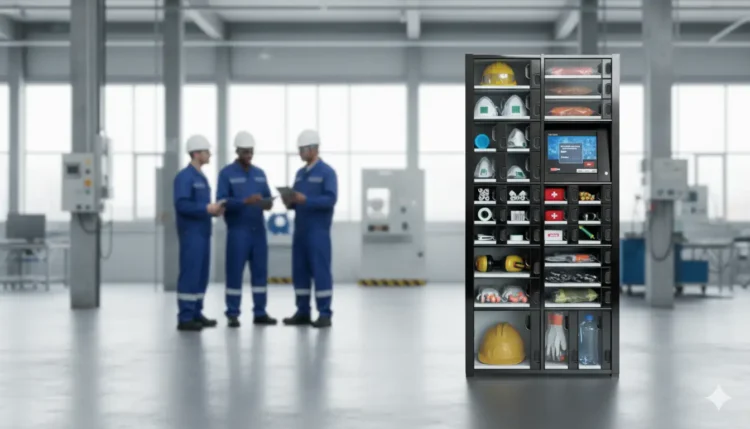
At Tooling Intelligence, we provide a comprehensive range of point-of-use vending solutions designed for modern industrial challenges. Our systems give you 24/7 visibility and control over your inventory, allowing you to maximise efficiency and safety.
Contact us today to learn how our cutting-edge vending solutions can transform your workplace.